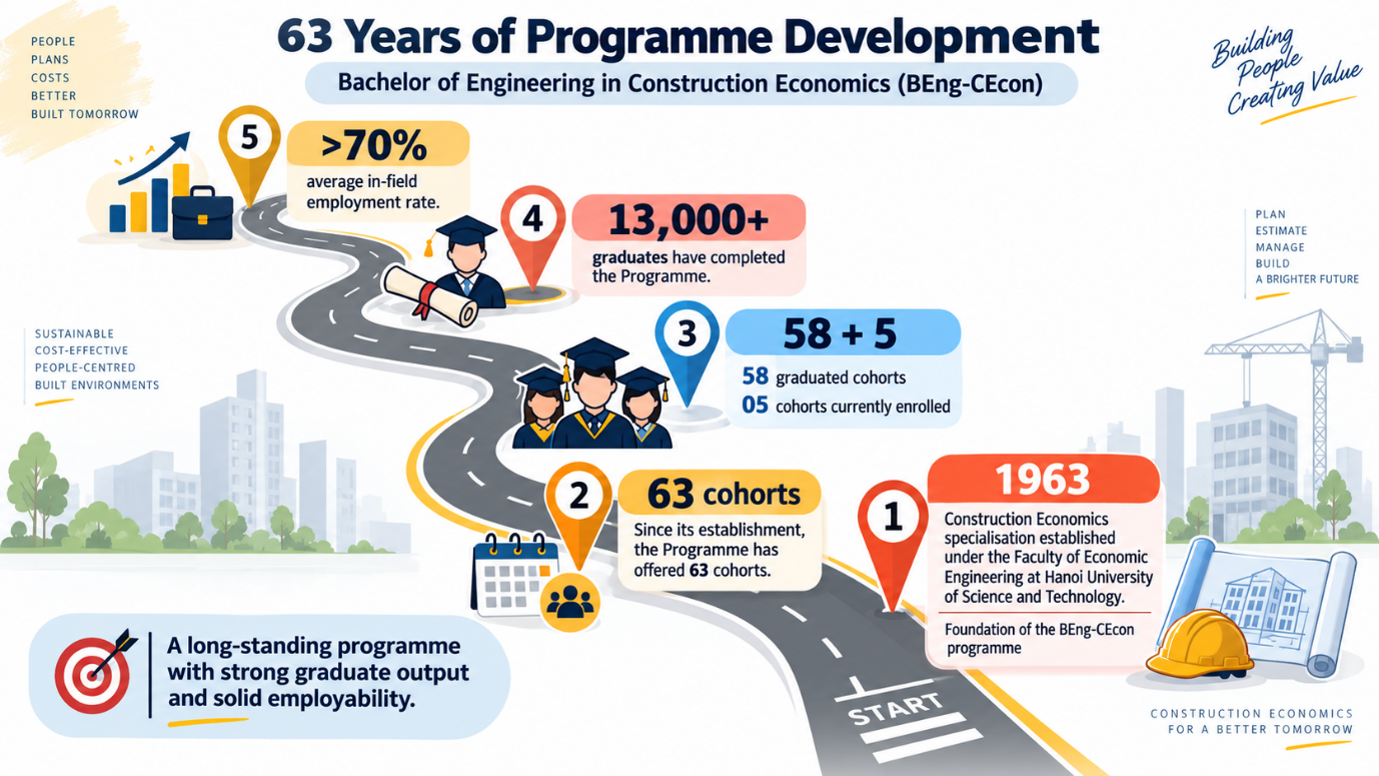
🔴 The Construction Economics Engineering Programme at Hanoi University of Civil Engineering is one of the University's longest-established programmes, with its educational foundations dating back to 1963. To date, the Programme has admitted 63 cohorts, of which 58 have graduated and five are currently studying. It has produced more than 13,000 construction economics engineers, contributing to the construction industry and the wider economy.
🔶 The Programme is designed in accordance with the principles of Outcome-Based Education (OBE), comprising 180 credits and integrating knowledge of construction engineering, economics, management, law, and digital technologies. Students develop their competencies through project-based learning, case studies, specialised software applications, scientific research, industry internships, and graduation projects. Through these activities, students progressively acquire competencies in cost management, schedule management, quality management, tendering, contract management, financial management, and construction project management.
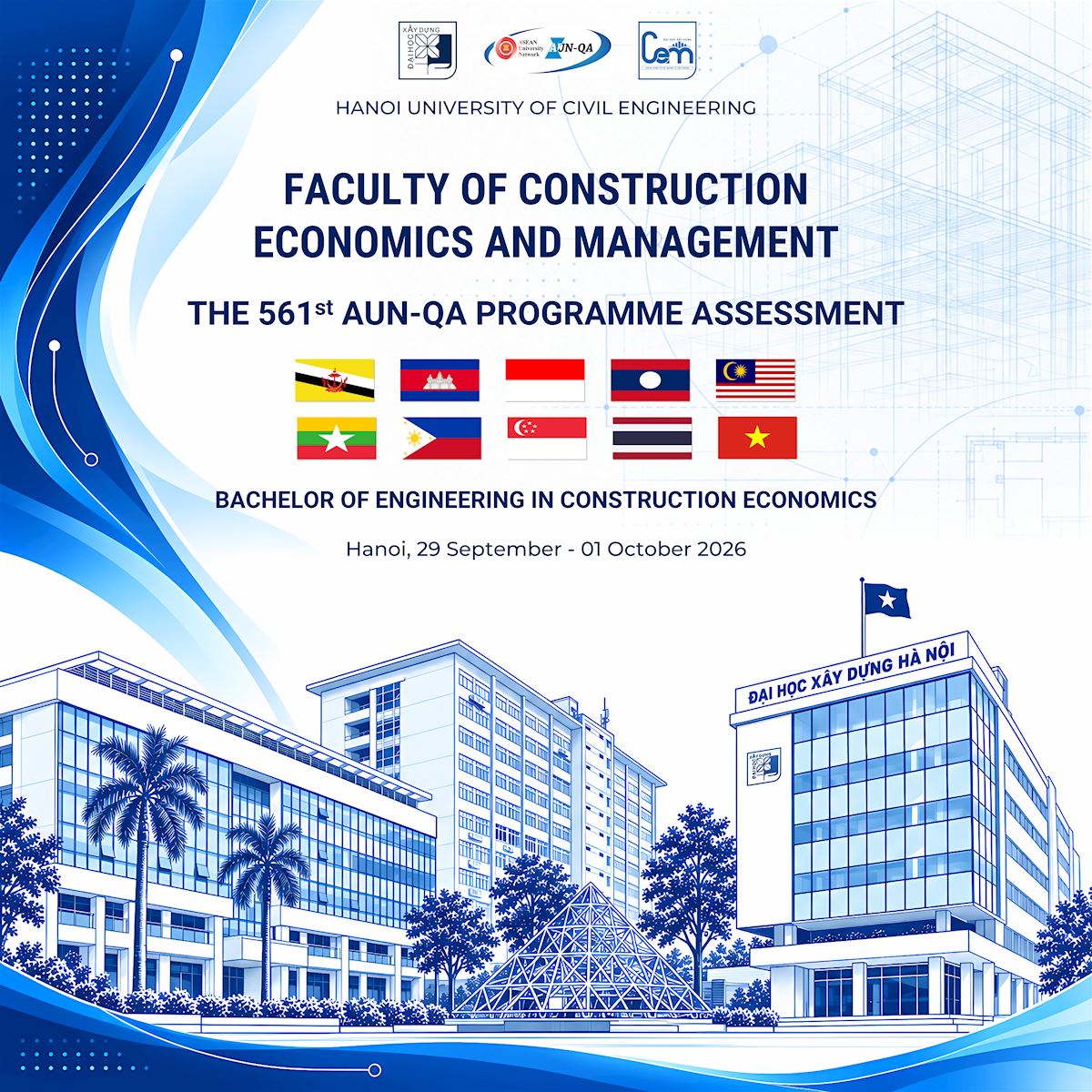
🔶 A significant milestone for the Programme in 2026 is its participation in the external assessment against the AUN-QA Version 4.0 standards. The Self-Assessment Report has been prepared in accordance with the eight AUN-QA criteria, covering expected learning outcomes, programme structure and content, teaching and learning approaches, student assessment, academic staff, student support services, facilities and infrastructure, and programme outputs and outcomes.
According to the schedule, the AUN-QA external assessment team will conduct its site visit at Hanoi University of Civil Engineering from 28 September to 1 October 2026. During the visit, the team will hold discussions with University leaders, academic staff, students, alumni, and employers, as well as review the Programme's quality assurance arrangements and supporting facilities.
🔵 Participation in the AUN-QA assessment represents not only an important milestone in the Programme's quality assurance activities but also demonstrates the Construction Economics Engineering Programme's commitment to educational innovation, stronger industry engagement, digital transformation, and continuous quality improvement. These efforts aim to educate construction economics engineers who can meet the increasingly demanding requirements of the construction industry in the context of international integration and sustainable development.

 /



 30/09/2026